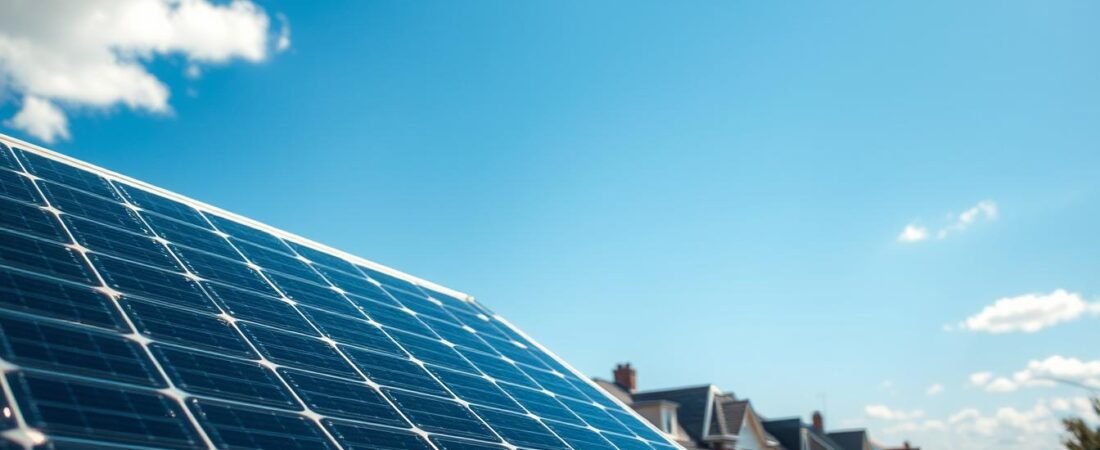
Ready to make a smart home energy choice? This guide lays out clear facts so homeowners can weigh the average price and long-term benefits. As of April 2026, the average solar panel cost baltimore homeowners pay is $2.86/W, including installation.
We explain how a typical system pays back over 25–30 years and how incentives and the federal tax credit improve your return. Understanding installation costs and system size helps you plan a realistic budget for your roof.
Why it matters: locking in predictable energy bills protects you from rising utility prices and makes a renewable energy investment practical. The guide also compares local companies, net metering policies, and options for both small and large panel system setups.
Understanding the Solar Panel Cost Baltimore Homeowners Pay
Understanding what goes into a full system price lets buyers compare companies with confidence. Roof size, household energy use, and the selected installation company all shape the final price.
Since 2020, electricity rates in the city rose about 37%, pushing many homeowners to explore alternatives. Working with established firms like Palmetto (founded in 2009) can simplify permitting and warranties.
- System size — larger systems produce more energy and typically offset nearly 100% of household usage.
- Equipment and labor — the total price includes modules, inverters, racking, and skilled installation crews.
- Company track record — reputable installers deliver better warranties and long-term performance.
Tip: compare system production estimates, not just the upfront price. Over the years, panel efficiency has improved, so newer systems often generate more power from fewer panels and can shorten payback years.
Why Solar Energy is a Smart Investment for Maryland Residents
With grid prices climbing, generating your own electricity has moved from experiment to smart financial move. Maryland ranks 10th nationwide for residential installations, showing many homeowners trust this approach.
Rising Electricity Rates
Between 2020 and 2024, local rates rose roughly 37%. BGE customers paid about 16.5¢ per kWh in 2023, slightly above the U.S. average.
That trend means a well-sized system can cut bills and shield you from future price swings.
Environmental Impact
Generating clean energy at home reduces your reliance on the grid and lowers emissions. Over time, this makes your household’s footprint much smaller.
| Benefit | Local Impact | Why it Matters |
|---|---|---|
| Lower monthly bills | Offsets grid electricity | Predictable energy expenses |
| Net metering | Credits for excess power | Improves ROI |
| Environmental gains | Fewer carbon emissions | Supports renewable energy growth |
Breaking Down Average Installation Prices by System Size
System size drives most of the upfront price, so choosing the right kilowatt capacity shapes your total investment.
A 5 kW system in the city averages about $14,293 before incentives. A larger 11.17 kW solar panel system runs roughly $31,920 before credits.
Doubling capacity roughly doubles the price, which makes scaling predictable as your household energy needs change.
- Compare average solar quotes for each system size to verify fair pricing.
- Review price per watt to compare different panels and equipment fairly.
- Remember that companies vary prices based on equipment, labor, and warranties.
A properly sized system maximizes production while keeping installation costs reasonable. Get multiple quotes for different system sizes to see which investment fits your budget and long-term goals.
Key Factors That Influence Your Total Project Quote
Your roof type and mounting choices are often the single biggest drivers of a final project quote. Roof-mounted systems typically cost less than ground mounts or carports because they need less labor and hardware. Installers will inspect material, pitch, and attachments to pick the right mounts.
Roof Type and Mounting
Shingle roofs use standard anchors, while standing-seam or tile roofs often need special clamps or flashing. That specialized equipment raises the price and can add installation time.
Shading and Sun Exposure
Shade from trees or nearby buildings lowers energy production. More shade means you may need a larger system size to meet goals, increasing the overall price.
Distance to Interconnection
The distance from your panels to the home’s service panel affects wiring length and labor. Minimizing that run reduces installation costs and helps the whole system perform better.
- Tip: a professional site visit helps designers place panels for best power and value.
- Investing in quality mounting and design saves money over the long run.
Leveraging Federal and State Solar Incentives
Maryland offers multiple credits and exemptions that directly lower both the price and long-term expenses of a home system.
Key state benefits include a 100% real property tax exemption, so your property taxes do not rise after installation. Eligible homeowners may also claim grants through the Maryland Solar Access Program: $750 per kW up to $7,500.
A 6% sales tax exemption on panels and equipment further reduces the upfront price. On the federal side, the investment tax credit lets you deduct a portion of your installation from your federal income tax liability.
“Stacking state grants, sales tax relief, and the federal tax credit can cut years off your payback.”
- Use every available tax credit and grant to maximize your return.
- Many companies help homeowners apply for incentives and verify eligibility.
- Net metering complements these programs by crediting excess electricity produced by your system.
Action step: gather documentation, ask installers for incentive assistance, and claim the credits to make your renewable energy investment more affordable.
Exploring Financing Options for Your Solar System
Financing can make a home system affordable without draining savings. Many homeowners choose loans or third‑party agreements to spread payments while they start saving on electricity.
Solar loans from the Maryland Clean Energy Bank offer low rates, no dealer fees, and no prepayment penalties for residential projects. You can often bundle a battery or roof work into the same loan.
Power Purchase Agreements
A PPA lets a provider own the panels and sell you the energy. This requires no upfront payment but limits your eligibility for some tax credit and incentives.
| Option | Upfront | Ownership | Tax Credit |
|---|---|---|---|
| Maryland Clean Energy Loan | Low/none | Homeowner | Eligible |
| Power Purchase Agreement (PPA) | None | Provider | Not directly |
| Cash Purchase | High | Homeowner | Eligible |
Tip: loans often preserve access to the federal investment tax credit and reduce total installation costs. Compare rates, term lengths, and how companies service your system to pick the best option.
For program details and to explore low‑cost loan offers, see the Maryland Clean Energy Bank programs.
Maximizing Savings Through Net Metering and SRECs
Net metering and SRECs turn surplus generation into measurable savings. In Maryland, utilities credit exported electricity at the full retail rate, which boosts the value of any home system. That credit offsets future utility bills and shortens payback years.
SRECs let owners sell renewable energy credits for every 1,000 kWh produced. Selling these credits for up to 15 years can add steady income and improve overall returns.
Cleaning and Snow Removal
Rain handles most upkeep, so routine washing is rarely needed. If production dips, consider a professional inspection to check for soiling or shading.
- Register your system with the appropriate state program to start earning SREC income.
- Monitor production through your utility or installer so you know when credits appear on your account.
- Choose the right system size to fully capture net metering benefits and SREC revenue.
“Net metering plus tax credits and SREC sales can make your home energy upgrade both cleaner and more profitable.”
Long-Term Maintenance and System Reliability
A well-maintained system will deliver steady energy for decades with minimal hands-on care. Modern solar panels are built for long life and low upkeep.
Most modules come with 25–30 year warranties. Inverters typically carry 12–25 year warranties. These protections reduce your risk from equipment failure and keep tax and incentive benefits safe.
Cleaning and Snow Removal
Cleaning is rarely needed. Rain removes most dirt, so manual washing is seldom required.
Snow removal is generally not recommended. The array warms and sheds snow when the sun hits it, preserving output without risky roof work.
- Low maintenance: panels need little routine service over their lifetime.
- Warranty protection: inverters and systems are covered by long manufacturer guarantees.
- Monitoring: regular performance checks flag issues early and keep electricity flows steady.
- Net metering: grid connection smooths out production dips and helps stabilize bills.
- Professional service: use a certified company for repairs or inspections to protect your installation and tax benefits.
“Investing in a high-quality panel system minimizes repairs and maximizes long-term output.”
How to Compare Quotes from Local Installers
Begin by reviewing detailed production estimates so you can compare true value across quotes. Check yearly output numbers, expected degradation, and warranty lengths. These metrics show how much electricity your system will truly deliver.
Get at least three bids from local companies and a marketplace to increase transparency. Competition often lowers prices by as much as 20% and reveals better service options.
- Look for experienced installers like IntegrateSun — they have 37 years in the market and over 7,000 completed projects.
- Ask for a full breakdown of installation costs, equipment brands, and expected performance for your roof and system size.
- Confirm how each company handles net metering and whether they assist with the federal tax credit and other incentives.
- Read reviews, verify licensing and insurance, and compare warranty terms before choosing a company.
Tip: use comparison tools and the local pricing guide on EnergySage to check typical prices, then visit service pages like RadiantShift Solar to see installer offerings. Proper vetting helps homeowners save money and secure a reliable installation.
Conclusion
A friendly plan and the right installer make a home energy upgrade work for you. , Careful choices about system size and installation help homeowners capture incentives and tax credit benefits quickly.
Investing in clean energy reduces monthly electricity bills and can raise property value. Picking reputable companies and comparing quotes ensures the best long‑term return on your investment.
With simple maintenance and proper design, a quality panel system delivers reliable power for decades. Ready for the next step? Request a personalized quote or learn more about our team to see how much solar can benefit your home. Thank you for using this guide to make an informed decision.