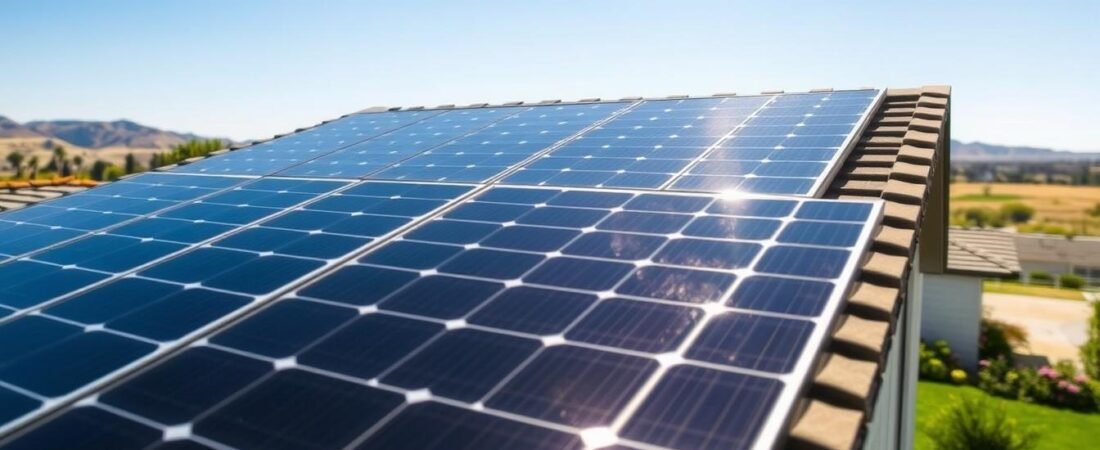
Thinking about going solar? Now is a meaningful time to review your roof, energy needs, and the numbers that drive long-term savings.
As of April 2026, systems run about $2.51 per watt, and a typical 9.05 kW installation totals roughly $22,697 before incentives. Most homeowners see a payback in about 7.58 years, after which the system delivers net savings.
Over a 25-year period, a household can expect roughly $132,244 in reduced electricity bills. That makes this an investment that often outperforms other home upgrades when you factor in utility rate trends and available incentives.
Want detailed local pricing and ranges for different system sizes? See this regional breakdown for more context: California system price ranges and incentives.
Understanding the Average Solar Panel Cost California
Upfront prices in the state trend above the national market, reflecting local labor and permitting fees. At about $3.14 per watt, that higher per‑watt figure helps explain why a typical 7.2 kW system runs near $22,600 before incentives.
Monthly electric bills in the state average about $219, so many homeowners recover their investment faster than they expect. Property tax rules that exclude the added value of your installation offer an extra, indirect benefit.
Where your roof faces, local utility rates and system size change the final quote. Use available rebates and the federal tax credit to lower out‑of‑pocket spending and boost long‑term savings.
- Per‑watt rate explains statewide pricing differences.
- Typical 7.2 kW installation is roughly $22,600 before incentives.
- Property tax exclusion and bill reductions improve payback.
For a regional price breakdown and more on how incentives affect your numbers, compare guides like solar panels cost in CA.
Current Market Trends for Residential Solar
Recent trends show notable declines in equipment prices and shifts in typical installation sizes. Over the last ten years, equipment expenses have dropped about 53%, making rooftop systems more attainable for many homeowners.
Impact of System Size
Because panels are more efficient, many California homeowners choose smaller systems than the national norm. The national system is roughly 9 kW, about 50% larger than local installs.
Smaller size often lowers upfront fees and shortens installation time. That can improve payback windows and increase savings sooner.
Comparing Costs to National Averages
State residents pay nearly 30% less in total system costs than the typical U.S. buyer. At the same time, rising electricity rates make switching to home solar power financially urgent.
“Waiting for prices to fall further can mean paying more in utility bills over the coming years.”
Bottom line: lower equipment costs, high adoption, and climbing rates combine to make rooftop installations a compelling long-term investment.
Key Factors That Influence Your Total Installation Price
Your final installation price depends on several moving parts, from system size to local labor rates. Each additional kW of capacity typically adds about $3,330 to the bill. That makes size a primary driver when you compare quotes.
Equipment like solar panels and inverters usually make up roughly 21% of total costs. The rest covers skilled labor, permits, and overhead. In states with high wages, labor can push the installation price notably higher.
Because this region averages 284 sunny days per year, homeowners may need fewer panels than in cloudier areas. Roof tilt, shade, and your home’s efficiency also determine how many modules a system requires.
| Factor | Typical Impact | What to Check |
|---|---|---|
| System size | +$3,330 per kW | Match size to usage and roof space |
| Equipment | ~21% of total | Compare efficiency vs. price |
| Labor & permits | High local rates raise total | Get multiple installer bids |
| Sunlight & roof | Better exposure lowers panels needed | Assess shading and orientation |
Action tip: balance higher-efficiency equipment against upfront investment to improve long-term energy production and lower electricity bills over the years. Compare quotes and check available incentives, credits, and tax rules when you decide on a final system and installation plan.
Comparing Different Solar Financing Options
Choosing how to fund a rooftop system shapes your monthly budget and long-term returns. Each path changes ownership, tax benefits, and who claims the incentives.
Cash Purchases
Paying cash gives the highest long-term savings. You avoid interest and keep the full federal credit.
Over a 25-year period, cash owners typically see the biggest net benefit because there are no loan fees or lender restrictions.
Solar Loans
Loans spread the upfront expense and preserve savings for other uses. Many loans offer APRs between 4% and 8% with terms of five to seven years.
You can often set monthly payments to match your current electricity bill, making the switch budget-neutral while you build equity in the system.
PACE financing is another loan-style option that attaches payments to property tax bills and can reduce initial money outlay.
Leases and Power Purchase Agreements
Leases and PPAs let you use clean energy with little or no upfront money. The provider owns the equipment and handles maintenance.
With a PPA you pay a per-kWh fee for power; a lease charges a fixed monthly amount. Both limit tax credit access but lower start-up exposure.
| Financing Type | Ownership | Typical Benefit | Consideration |
|---|---|---|---|
| Cash | Owner | Max long-term savings, eligible for tax credit | Highest upfront outlay |
| Loan (incl. PACE) | Owner | Spread payments; claim tax credit | Interest adds to total; check APR |
| Lease | Provider | Low upfront money; simple monthly fee | No tax credit; limited resale value benefit |
| PPA | Provider | Pay per kWh; no maintenance worry | Rates may rise; no tax credit |
Quick tip: weigh payback periods and available incentives before deciding. To compare local offers and get tailored quotes, find local installation services.
Available Incentives and Rebates for California Homeowners
Tax credits and state programs often turn an expensive installation into an affordable upgrade. Homeowners can combine federal, state, and local incentives to cut upfront spending and speed payback.
Federal Tax Credit Benefits
The federal Residential Clean Energy Tax Credit gives a 30% credit on the total cost of your system. You claim it on IRS form 5695 when you file your annual return.
How it helps: the credit lowers your tax bill dollar‑for‑dollar and can be applied alongside other rebates. If you take a loan, you still qualify; with leases or PPAs, the provider often passes savings to customers.
- The Self‑Generation Incentive Program (SGIP) pays about $150 per kWh for battery capacity.
- New low‑income incentive payments launched for 2025 give targeted help to qualifying households.
- Local utilities, like SMUD, may offer extra rebates (often up to $2,500) or streamlined application help.
“Combine federal and state incentives to dramatically shorten your payback period.”
Quick steps: collect installer invoices, confirm system size and battery details, and file form 5695. Check local utility sites and your installer for application forms and required documentation to secure every available rebate and credit.
Evaluating Equipment Quality and Efficiency
A well-spec’d system balances efficient modules, robust inverters, and reliable batteries. Choose gear that matches your system size and roof layout to get the most energy over the years.
Solar panels and inverters make up about 21% of total installation costs, roughly $0.65 per watt. Spending more here often reduces maintenance and boosts long-term production.
High-efficiency modules can squeeze more kilowatt-hours from limited roof space. They may require pricier microinverters to handle higher output safely.
Adding storage improves resilience. A Tesla Powerwall sits near $15,600 before rebates and tax credit. FranklinWH models often run about $2,000 higher but offer a solid alternative.
| Component | Typical Impact | Why it matters |
|---|---|---|
| Modules | ~21% of costs | Efficiency cuts the number of panels needed |
| Inverters / microinverters | Match high output | Better performance, higher upfront price |
| Batteries | $15,600–$17,600 typical | Backup power and peak shaving |
Tip: invest in quality components to optimize system size and long-term energy returns. Good equipment often pays back in lower repair bills and steadier electricity output.
Long Term Maintenance and Care for Your System
Regular checks and timely repairs help your equipment deliver steady energy for decades. A few simple steps keep production high and protect your investment.
Cleaning and Roof Maintenance
Clean panels about every six months to remove dust and pollen. In this region, mild weather means systems stay low‑maintenance with simple rinses.
Professional cleaning averages about $400 per year. DIY rinsing with a hose cuts that expense and works well when done safely.
If you must replace a roof later, expect removal and reinstallation fees between $500 and $1,000. Good installers will inspect your roof before installation to avoid those added costs.
- Follow a twice‑yearly cleaning schedule for steady output.
- Use professional help only when needed to save on yearly costs.
- Confirm roof condition before installation to avoid future removals.
Tip: regular visual checks and prompt roof repairs preserve system performance. Small upkeep now helps lower long‑term costs and keeps your home producing reliable electricity for many years.
Strategies for Finding the Best Local Installers
Work methodically: compare reputation, quoted per watt rates, and warranty terms before you sign any agreement.
Start by using a marketplace like EnergySage to gather custom quotes. That tool often yields prices up to 20% lower than single-company offers.
With nearly 900 registered installers in the state, you have options. Get bids from at least three companies to spot outliers and hidden fees.
Vetting matters. Check experience, recent customer reviews, and whether the installer handles local utility interconnection and permits.
- Equipment choices: ask which brands they install and how that affects long-term maintenance.
- Warranties: consider third-party cover like Solar Insure for extra protection.
- Financing: compare loan, cash, and lease offers to see which delivers the best savings over the years.
“Take time to compare multiple quotes—it’s the best way to save money and secure quality installation.”
Tip: include practical checks: proof of license, sample contracts, and references. Doing this saves time, reduces risks, and improves your final energy and cost outcomes.
Conclusion
Investing in a rooftop system often turns into steady savings and greater energy independence over time. By using federal tax credits and local rebates you can lower installation cost and shorten payback.
Get at least three quotes from vetted local installers to compare equipment, warranties, and final cost. Choose high-quality panels and maintain them regularly to protect production for 25 years or more.
Going solar helps your home cut monthly electricity bills and supports cleaner energy for the region. Start today—use our resources to find the right system, compare offers, and move forward with confidence.