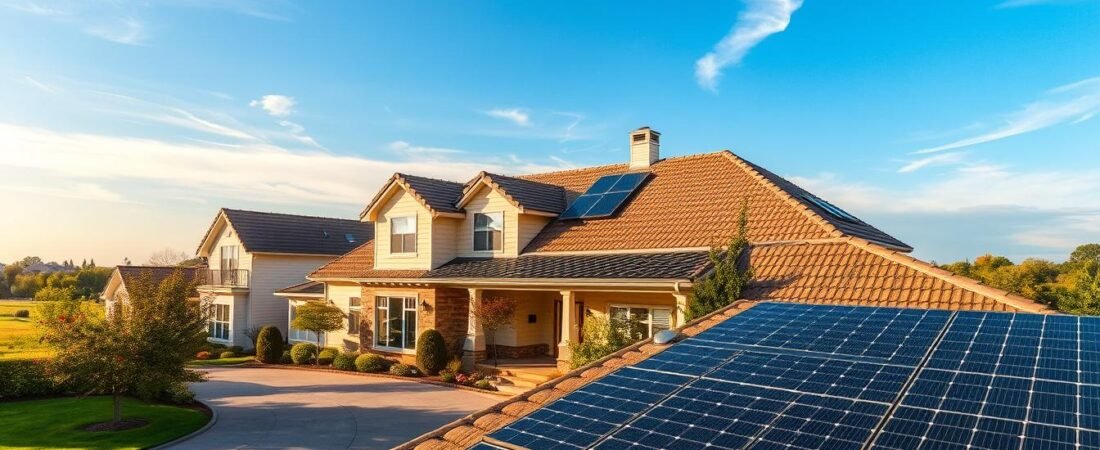
Choosing the right setup means weighing performance, warranty coverage, and long-term value. Homeowners want systems that deliver steady energy output and low degradation over the years.
Our guide simplifies the market by highlighting top brands and real-world testing. Canadian Solar, a manufacturer since 2001, ranks high for consistent manufacturing quality and competitive warranties.
We examine efficiency, durability, and how panels perform under varied roof and weather conditions. That helps you compare upfront cost with projected energy savings and lifespan.
Thinking about installation? A qualified installer ensures your system reaches rated output and that warranties remain valid. Use this guide to match quality products with trusted installers for the best long-term return.
Understanding the Best Residential Solar Panel Market
Competition in the industry drives frequent upgrades to efficiency, warranty terms, and manufacturing quality. This fast pace means homeowners must weigh technology and long-term value before choosing a system.
Consider three main factors: the manufacturer’s financial strength, the length and coverage of the warranty, and real-world performance. Companies that invest in R&D often offer higher efficiency and lower degradation over the years.
- Technology gains lift energy conversion rates and reduce cost per watt.
- Robust warranties and clear coverage protect your investment over many years.
- Quality manufacturing balances upfront price with lifetime value for your roof and power needs.
Evaluating brands by reputation and testing helps you avoid unreliable products. Focus on system-level value: efficiency, longevity, and installer support matter more than specs alone.
Key Performance Metrics for Modern Solar Technology
Performance data cut through marketing claims to show what a product will actually deliver on your roof.
Temperature Coefficient
Temperature coefficient shows how much output falls as the module heats up. A lower number means less loss on hot afternoons.
Manufacturers tune materials and cell design to reduce heat-related degradation. That helps maintain steady power during peak summer months.
Power Output
Power output and panel efficiency determine how much usable energy a system produces from limited roof space.
- Higher efficiency delivers more energy per square foot.
- Consistent output across conditions improves long-term value and lowers effective cost per kWh.
- Tracking degradation rates helps compare warranties and projected energy over years.
Compare these metrics across brands and installers to select panels that match your climate and energy goals.
Evaluating Solar Panel Durability and Longevity
Real-world endurance starts with lab stress sequences that simulate heavy snow loads and hurricane-force winds.
Durability matters more than specs when you plan for 25 years of reliable energy. Manufacturers run mechanical stress cycles to test how a product withstands high winds, heavy snow, and big temperature swings.
These tests reveal how well panels keep performance and resist premature degradation. Homeowners in storm-prone areas should prioritize weather resistance when choosing a system.
Mechanical Stress and Weather Resistance
Quality manufacturing and robust frames reduce the chance of micro-cracks and delamination under load. That protects long-term output and maintains efficiency.
- Wind and snow load tests check structural strength.
- Thermal cycling reveals resistance to extreme temperature swings.
- Humidity and salt-fog testing matters near coasts.
| Test Type | What It Shows | Impact on Warranty | Buyer Takeaway |
|---|---|---|---|
| Mechanical load | Frame and cell integrity under weight | Supports longer workmanship coverage | Choose reinforced frames for snowy roofs |
| Thermal cycling | Resistance to cracking from temp swings | Related to degradation guarantees | Look for low degradation rates over years |
| Humidity/salt-fog | Corrosion and seal durability | May affect coverage near coasts | Prefer marine-grade sealing and coatings |
| UV exposure | Material aging and discoloration | Informs product longevity claims | Verify manufacturer testing standards |
Bottom line: Prioritize panels proven in rigorous testing and paired with clear warranty coverage. That approach protects your investment and ensures steady energy output for many years.
The Role of Brand Reputation and Financial Stability
A maker’s track record and balance sheet tell you if warranties will hold up over decades. Financial stability signals that a company can stand behind long-term warranty promises and ongoing product support.
Look beyond specs. Review historical performance, customer feedback, and transparency in financial reporting. A trustworthy manufacturer invests in manufacturing and in service networks that protect your system.
Recent market moves underline the risk. Panasonic plans to exit its solar business in April 2025, while Qcells commands wide installer adoption—58% of installers offer their panels. Those facts show why brand viability matters.
Practical tip: Favor companies that publish clear warranties, show steady sales, and answer quality concerns promptly. Avoid brands with inconsistent product records or opaque finances.
- Why it matters: A stable company preserves warranty value and reduces replacement risk.
- How to check: Look at installer preferences, public filings, and long-term service policies.
Why Efficiency Ratings Matter for Your Roof
Understanding efficiency gives a clearer picture of real-world energy output than nameplate wattage alone.
Higher efficiency lets you generate more electricity from limited roof area. That matters when roof space is tight or orientation is less than ideal.
High efficiency solar panels convert a larger share of sunlight into usable power. This reduces monthly energy bills and raises total yearly output.
Compare panel efficiency alongside temperature coefficients and degradation rates. Those metrics show how performance holds up over years and when warranties matter most.
- Choose higher efficiency when roof area is small.
- Balance efficiency with warranty and long-term degradation figures.
- Top brands keep improving efficiency to boost lifetime energy production.
By weighing efficiency against other factors you can select panels that deliver steady output and lower long-term risk. That approach aligns your system with real energy goals.
Comparing Top Tier Solar Manufacturers
Picking a supplier means weighing real output, warranty support, and where panels are made. This short guide separates premium offerings from value-focused lines and highlights U.S. manufacturing options.
Premium High Efficiency Options
REC Alpha Pure-RX earns attention for 460W output and strong degradation specs. These products target homeowners who want higher energy per array and stable performance over years.
Value Focused Brands
Canadian Solar and LONGi HiMo5 blend price and value. They deliver solid efficiency and attractive cost per watt for systems where upfront price matters.
American Made Selections
Silfab manufactures in Washington state and is noted for quality. SEG Solar added a Houston plant in 2024 to boost U.S. output and supply chain resilience.
| Brand | Notable Line | Typical Output / Efficiency | Distinctive Feature |
|---|---|---|---|
| REC | Alpha Pure-RX | 460W / ~22.5 efficiency | High power output, low degradation |
| Canadian Solar | Multiple value lines | 300–420W / mid-high efficiency | Strong global manufacturing and warranty |
| Silfab | Silfab modules | 330–400W / high quality cells | U.S. production, tighter supply control |
| SEG / LONGi | SEG / HiMo5 | Ranges to 450W / cost-effective efficiency | Expanded U.S. capacity, competitive pricing |
The Importance of Choosing a Qualified Local Installer
Installation quality often determines whether a high-rated panel delivers promised power and warranty coverage.
Pick a local company with at least five years of experience. Experienced installers handle complex roof mounting and the wiring that keeps your system safe and efficient.
Local teams know regional codes, permitting paths, and common roof issues. That expertise can prevent delays and protect warranty terms.
Before signing, check reviews, ask for references, and verify licensure and insurance. Compare multiple quotes to see who offers clear timelines and workmanship guarantees.
- Confirm five-plus years of local experience.
- Ask about post-installation support and maintenance.
- Request written details on performance checks and warranty handling.
| What to Ask | Why It Matters | Minimum Expectation | Homeowner Tip |
|---|---|---|---|
| Licenses & insurance | Protects you from liability | Current state license + liability insurance | Verify with state regulator |
| Experience | Fewer installation errors | 5+ years local work | Ask for recent project photos |
| Warranty handling | Smooth claims and repairs | Clear process in writing | Get warranty contacts in contract |
| References & reviews | Shows real-world performance | Multiple local references | Call past customers about follow-up service |
Navigating Solar Warranties and Performance Guarantees
A warranty is more than a promise; it is a forecast of long-term output and reliability. Look at both what is covered and how coverage is measured.
Understanding Degradation Rates
Degradation tells you how much energy a module loses each year. Most solar panels show about 0.4% degradation annually.
At that rate, a panel keeps roughly 92%–93% of its original output after 25 years. That figure is vital when comparing 25-year performance guarantees.
- Product warranty covers defects and workmanship.
- Performance guarantee promises minimum output after a set number of years.
- Read exclusions carefully; environmental damage or poor installation can void claims.
Some companies, like Maxeon, now offer extended warranties up to 40 years. That can add confidence but also ask you to assess the company’s bankability.
Practical tip: Compare 25-year performance figures and check financial records or installer feedback to ensure the company will honor long-term warranties.
Aesthetic Considerations for Residential Solar Arrays
A home’s curb appeal now often extends to the array on the roof, so design choices matter as much as specs.
All-black solar panels with matching frames and backsheets are popular for a clean, modern look. They blend into dark roofs and reduce visual contrast on light roofs when paired with black trim.
Design doesn’t have to mean compromise. Many manufacturers now offer high-efficiency options in sleek finishes. That makes it easier to get both visual appeal and strong performance.
“Choosing the right equipment can balance high energy production with a visually pleasing installation.”
Consider practical points before you decide:
- Frame and cell color: matching frames minimize visible grid lines and create a unified look.
- Cell layout: half-cut or mono PERC cells change texture and reflection.
- HOA rules: select styles that meet neighborhood guidelines while keeping warranties intact.
For tips on integrating a system that enhances curb appeal, see our curb appeal design guide. A considered choice can add value to your home and deliver reliable power for years.
Balancing Upfront Costs with Long Term Energy Savings
Start with total lifecycle cost, not just sticker price, to see how choices affect returns over 25 years.
A typical 12 kW system costs about $30,505 before incentives. Over time, electricity savings can reach roughly $60,000.
Federal tax credits and state rebates lower the initial cost per watt. That can shorten the payback period and raise net value.
- Compare cost per watt: divide installed price by system kilowatts to compare offers.
- Factor performance: higher-rated modules (for example REC lines with ~22.5 efficiency) often deliver more power output and slower degradation.
- Estimate payback: calculate 25-year savings to find when the system pays for itself.
Smart buying blends price, projected energy, and brand track record. Homeowners who plan for long-term output often see better returns and greater energy independence.
Final Thoughts on Selecting Your Solar System
Final note: pick equipment and installers that match your energy goals and budget.
Work with trusted local installers to design a system that fits your roof and household use. Ask for multiple quotes and check references before you sign.
Consider a recognized maker like REC for proven 25-year performance and clear warranties. Favor a financially sound company so coverage stays valid for decades.
Compare the cost per watt and expected power output across offers. That helps you see true lifetime savings, not just the upfront cost.
Make choices that deliver steady energy, protect your investment, and give you confidence to move forward.