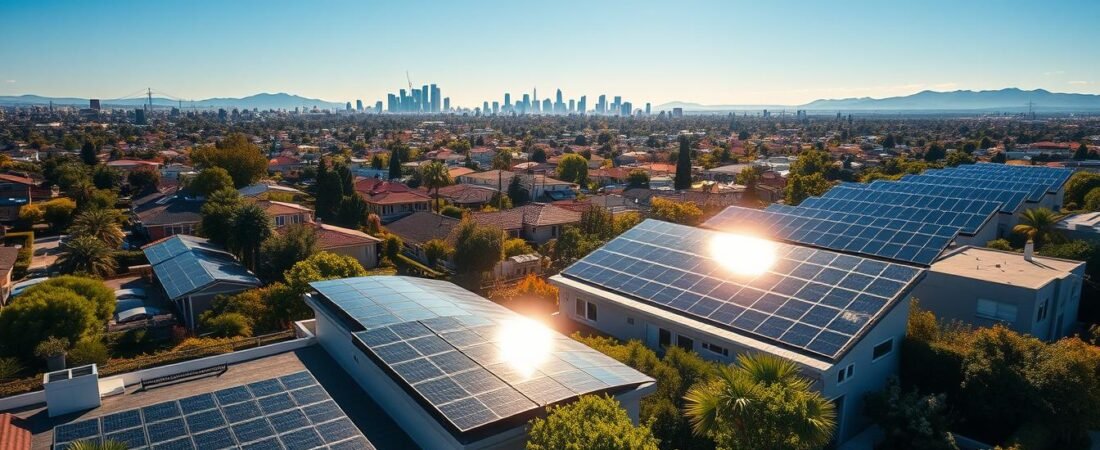
Looking for a reliable way to cut bills and boost energy independence? This guide highlights trusted names and what to expect during a typical solar panel installation. LA Solar Group grew from a small shop in 2010 to a team of dozens, and AWS Solar has been a licensed contractor serving the community since 2007.
Choosing the right partner matters. A good installer simplifies permits, layout and wiring. They also help you compare a fair quote and timelines so your project stays on track.
Modern panels deliver steady power and long life. Our experts explain how a professional panel setup can turn your home into a high-efficiency energy source without jargon.
Use this guide to weigh options and get a competitive quote for solar panel installation today.
Why Switch to Solar Energy in Los Angeles
More households now produce electricity on-site to reduce utility reliance and control costs.
Local installers such as Plug It In Solar stress that clean energy offers real environmental and financial benefits. Homeowners can shrink their monthly bills by generating power from sunlight and locking in long-term savings.
Generating your own electricity reduces dependence on volatile utility rates. It also helps lower your carbon footprint, a goal championed by local experts who focus on renewable energy solutions.
- Produce your own electricity and cut reliance on traditional providers.
- Reduce emissions and support a cleaner, more resilient grid.
- Achieve stable, long-term savings and better control over monthly costs.
| Benefit | Short-Term | Long-Term |
|---|---|---|
| Lower bills | Immediate reduction in monthly charges | Decades of cumulative savings |
| Environmental impact | Reduce household emissions | Support regional clean energy goals |
| Energy control | Less exposure to rate spikes | Greater household resilience |
Top Solar Panel Companies in Los Angeles
Finding a trusted local partner makes a big difference. The right team handles permits, matches systems to roof types, and avoids common delays.
Local Expertise
LA Solar Group brings over 15 years of hands-on experience and has completed thousands of successful installations across the region.
Their technicians know regional codes and climate challenges. That helps them design durable systems and speed approvals.
Proven Track Records
AWS Solar is a licensed electrical contractor active since 2007. With more than 18 years of service, the company focuses on premium residential and commercial systems.
Choose providers with clear records:
- Custom solutions tailored to your property.
- Teams that handle complex installations with skill.
- Ongoing support after you install solar panels.
| Provider | Years | Focus |
|---|---|---|
| LA Solar Group | 15+ | Residential & commercial installations |
| AWS Solar | 18+ | Design & licensed electrical work |
| Local Teams | Varies | Permitting, maintenance, custom solutions |
Key Benefits of Installing Solar Systems
A well-designed system turns unused roof space into a dependable source of electricity for your property.
Save on energy costs. Installing a solar system lets you generate your own electricity and cut reliance on costly utility rates for your home.
Better for businesses. LA Solar Group helps businesses save with rooftop installs and shade structures that boost energy production and financial returns.
Environmental and market advantages. Using solar energy reduces your carbon footprint, and panels often make homes and commercial sites more attractive to buyers.
Long-term value. A smart installation raises property value and delivers reliable power that protects operations during peak rates or brief grid outages.
Below are quick takeaways:
- Generate on-site electricity to lower monthly bills.
- Reduce emissions while improving resilience.
- Increase resale value and secure energy independence with advanced solutions.
Understanding the Solar Installation Process
Knowing the steps from inspection to grid hookup removes surprises and speeds approvals. A clear workflow also helps you compare quotes and set realistic timelines.
Initial Consultation
Free consultation: A local team visits your property, reviews your energy needs, and checks roof conditions. This site assessment identifies shade, orientation, and any roof work needed.
System Design
Custom plans are created to maximize roof space and long-term performance. Designers size the system, choose equipment, and prepare permit-ready drawings so approvals move quickly.
Final Grid Connection
During installation, technicians handle all electrical wiring and safety checks. After final inspection, the utility authorizes the grid connection and your system goes live.
What installers manage for you:
- Site assessment and permitting
- Custom layout and mounting work for the roof
- Safe electrical hookup and final inspection
| Stage | What Happens | Who Leads |
|---|---|---|
| Consultation | Free site visit, energy needs assessment | Local team |
| Design | Custom plan, roof optimization, permits | Design engineers |
| Installation | Mounting, wiring, roof repairs if required | Certified technicians |
| Final Connection | Inspection, utility sign-off, activation | Installer & utility |
Financial Incentives and Tax Credits
A 30% federal tax credit still makes upgrading to a modern energy system one of the most cost-effective home improvements. This credit applies to new systems, battery storage, and additions through 2027.
Plug It In Solar advises taking full advantage of available credits, local rebates, and utility incentives. These programs can cut your upfront cost and shorten the payback period.
We offer several financing options that match different budgets. These choices make the move to clean energy and renewable energy systems easier and less stressful.
- The 30% federal tax credit reduces total tax liability for eligible installations.
- Combining credits with rebates and financing boosts long-term savings.
- Including battery storage can qualify for the same incentives, improving resilience and value.
| Incentive | What It Covers | Typical Benefit |
|---|---|---|
| Federal Tax Credit (30%) | New systems, additions, batteries | Reduces project cost by up to 30% |
| State & Local Rebates | Installation or equipment-specific rebates | Varies by program; lowers upfront cost |
| Financing Options | Loans, leases, PACE programs | Spreads cost; improves affordability |
Next steps: Talk with our team to confirm eligibility, compare options, and lock in incentives now. Investing today helps secure meaningful savings and reliable solar power for years to come.
Residential and Commercial Battery Storage Solutions
A reliable storage system changes how homes and businesses handle outages. LA Solar Group installs residential and commercial battery systems, including the Tesla Powerwall 3, to keep critical loads running when the grid is down.
AWS Solar has designed and installed battery storage units and electrical upgrades for residential and commercial property owners for years. Their experience helps pair the right battery with each site and load profile.
Key benefits:
- Store excess energy to provide backup power during outages.
- Integrate battery storage with existing systems for seamless electricity availability.
- Help businesses manage peak demand and reduce reliance on the utility.
With modern solar battery tech like the Powerwall 3, clients gain resilience and peace of mind. For a site assessment or to learn more about our battery solutions, contact LA Solar Group.
| Use Case | Typical Capacity | Primary Benefit |
|---|---|---|
| Residential backup | 10–20 kWh | Keep lights and essentials running |
| Small business | 20–50 kWh | Reduce peak charges and avoid downtime |
| Commercial installations | 50+ kWh | Support critical systems and demand management |
Maintaining Your Solar Performance
Routine upkeep keeps your system producing reliably year after year.
Regular maintenance prevents dirt and debris from cutting output. Expert cleaning with deionized water can restore up to 15% of lost performance.
Plug It In Solar offers performance checks and scheduled service to keep your installation at peak efficiency for years.
“Consistent checks and eco-safe cleaning protect your roof and extend equipment life.”
Key care steps include:
- Professional cleanings to remove dust and bird droppings.
- Routine performance checks that spot issues early.
- Battery inspections and electrical safety reviews.
Our experienced team tailors maintenance to your needs. Keeping the roof and modules clean prevents long-term damage and keeps your home energy system reliable.
Evaluating Quality and Equipment Standards
Choosing durable, high-performing equipment is the fastest way to protect your investment and keep energy output steady for years. Start by verifying manufacturer efficiency claims and third-party test results.
High Efficiency Panels
Efficient modules that save space
High-efficiency solar panels deliver more watts per square foot. That matters when roof area is limited.
Look for:
- High conversion ratings from reputable manufacturers.
- Low degradation warranties to keep long-term performance stable.
- Sleek designs that blend with your home’s appearance.
Durable Mounting Systems
Rugged frames and secure attachments
Mounts must resist wind, corrosion, and thermal shifts. A strong system protects arrays through storms and heat cycles.
- Corrosion-resistant rails and stainless hardware.
- Flashings and seals matched to your roof type.
- Installation standards that meet local building codes.
Final note: Prioritizing premium components gives you reliable systems, better performance, and lasting value.
How to Choose the Right Solar Partner
Finding a partner that answers questions quickly and stands by their work makes projects run smoother. Pick a local team with clear steps, real references, and a written timeline.
Key checks to run:
- Confirm years of experience and documented installations.
- Ask for a transparent quote, financing options, and a clear process for permits.
- Verify services include system design, battery storage integration, and ongoing maintenance.
Good service means a dedicated point of contact and easy follow-up after activation. AWS Solar answers calls Monday–Friday 8:00 am–8:00 pm and Saturday 10:00 am–4:00 pm for quick support.
Value matters. LA Solar Group will beat any lower price on an equivalent bid, so compare bids and check recent performance records before you commit. Match proposals to your needs, then pick the team that delivers the best long-term value and confidence.
Conclusion
Choosing the right installer makes the transition to renewable power fast and worry-free.
Switching to solar power in los angeles is a smart move for long-term energy savings and local clean energy goals. Partner with a reputable company to ensure proper equipment, safe installation, and reliable performance.
Request a free quote today to compare costs and projected savings. A clear proposal helps you pick high-quality gear and a team that stands behind their work.
Take the first step toward energy independence and lower monthly utility bills by exploring top-rated providers near you. Start now and protect your investment for years to come.